Introduction
Champhai, a district located in the easternmost part of Mizoram, India, is often referred to as the “Rice Bowl of Mizoram.” This title is not merely metaphorical but reflects the district’s significant role in the agrarian economy of the state. With expansive paddy fields, fertile alluvial plains, and a temperate climate, Champhai is a vital contributor to Mizoram’s food security and rural livelihoods.
More than just a center of rice production, Champhai is a region of complex historical developments, ethnic diversity, cross-border trade, and ecological richness. This blog offers a structured academic overview of Champhai, highlighting its geographical features, agricultural importance, cultural context, economic contributions, and contemporary developmental challenges.
Geographical and Climatic Context
Champhai district borders Myanmar to the east and is situated approximately 188 kilometers from Aizawl, the state capital. Covering an area of about 3,185 square kilometers, Champhai lies at an altitude ranging between 1,000 to 1,800 meters above sea level.
Topography and Terrain
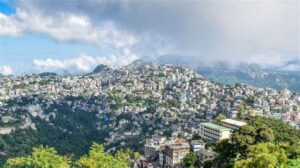
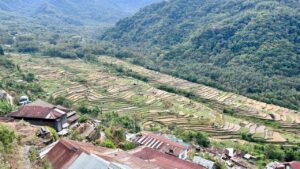
Champhai’s topography is characterized by rolling hills, fertile valleys, and a number of rivers and streams. The region’s flat valley plains — especially the Champhai Valley — are crucial for rice cultivation. This topographical layout allows for large-scale wet paddy farming, a rarity in Mizoram where steep slopes typically hinder such practices.
Climatic Conditions
The district experiences a subtropical highland climate, with moderate temperatures ranging from 11°C in winter to 30°C in summer. Annual rainfall varies from 1,800 mm to 2,500 mm, primarily during the southwest monsoon season. These conditions make it ideal for cultivating rice, vegetables, and fruits, as well as for maintaining biodiversity.
Historical Background
Champhai’s history is intertwined with the broader historical trajectory of Mizoram and the Mizo people. The region was originally inhabited by various Mizo tribes and clans, each with their own chieftainship-based governance systems.
Colonial and Post-Colonial Developments
During British colonial rule, Champhai was integrated into the Lushai Hills district of Assam province. Post-independence, it became part of the Union Territory of Mizoram in 1972 and was designated a full-fledged district in 1998. Champhai also played a key role during the Mizo National Front (MNF) movement in the 1960s and 70s, which eventually led to Mizoram gaining statehood in 1987.
Agricultural Significance
Paddy Cultivation
Champhai’s most defining feature is its rice cultivation. The district’s flat valleys — particularly the Champhai Valley, Zokhawthar, and Khawbung areas — support extensive paddy fields that operate on a mix of traditional and semi-modern irrigation methods.
Agricultural Practices
Farmers predominantly practice WRC (Wet Rice Cultivation), aided by seasonal monsoon rains and small-scale irrigation channels. In contrast to the widespread jhum (shifting cultivation) in other parts of Mizoram, Champhai’s terrain permits sedentary farming, leading to more sustainable yields.
Varieties and Productivity
Multiple varieties of rice — both indigenous and high-yielding — are cultivated, including aromatic types favored for local consumption. According to agricultural data from the Department of Agriculture, Champhai contributes over 30% of the total rice output in Mizoram annually.
Other Crops and Horticulture
Champhai is also known for:
- Grapes: Home to Mizoram’s only vineyard belt, especially in Hnahlan and Champhai town.
- Oranges and Passion Fruit: Grown in the hill slopes.
- Ginger and Turmeric: Cultivated for both domestic use and small-scale trade.
Ethnographic and Cultural Aspects
Champhai is predominantly inhabited by the Mizo ethnic groups, especially the Lusei, Ralte, and Hmar tribes. The region is culturally vibrant, with traditions rooted in community life, agriculture, and Christianity.
Language and Religion
- Language: Mizo (Duhlian) is the lingua franca, although English and Hindi are taught in schools.
- Religion: Over 95% of the population practices Christianity, with denominations like Presbyterian, Baptist, and Catholic being predominant.
Festivals
- Chapchar Kut: Celebrated in March, marking the clearing of land for cultivation.
- Mim Kut and Pawl Kut: Harvest festivals that celebrate the abundance of crops, especially rice.
These festivals are marked by folk songs, traditional dances like Cheraw (bamboo dance), and communal feasts.
Economic Importance
Champhai plays a pivotal role in Mizoram’s regional economy through three major avenues: agriculture, cross-border trade, and horticulture.
Border Trade with Myanmar
The district shares an international border with Myanmar, with the town of Zokhawthar serving as a trading post. Legalized under India’s Look East Policy, the trade route facilitates the exchange of goods like betel nut, dry fish, electronic items, and textiles.
The Champhai-Zokhawthar corridor is envisioned as a future economic growth zone, with infrastructure development planned under the India-Myanmar-Thailand trilateral highway and the Kaladan Multi-Modal Transit Transport Project.
Employment and Livelihoods
- Over 70% of the working population is engaged in agriculture and allied activities.
- Secondary employment arises from handicrafts, small-scale trade, and public sector jobs.
Biodiversity and Ecological Significance
Champhai is part of the Indo-Burma biodiversity hotspot and hosts rich flora and fauna.
Forest Types
- Tropical wet evergreen forests dominate the low-altitude areas.
- Montane forests with oak, rhododendron, and pine are found in higher elevations.
Notable Species
- Fauna: Hoolock gibbon, barking deer, wild boar, and diverse bird species.
- Flora: Medicinal herbs, bamboo, orchids, and endemic tree species.
Environmental Challenges
Despite its ecological wealth, Champhai faces issues like:
- Soil erosion due to hill farming in surrounding areas.
- Overuse of chemical fertilizers.
- Risk of deforestation due to expanding settlement and farming activities.
Efforts by local communities and government-backed programs like the New Land Use Policy (NLUP) aim to balance agricultural productivity with environmental conservation.
Education and Institutional Presence
Champhai has a growing educational infrastructure, with:
- Several higher secondary schools.
- Champhai College, affiliated with Mizoram University, offering undergraduate programs.
- Vocational institutes and training centers for skill development.
Additionally, agricultural extension centers support local farmers with knowledge on modern farming techniques, pest control, and irrigation systems.
Public Health and Infrastructure
Healthcare
Champhai Civil Hospital and a network of Primary Health Centres (PHCs) provide basic healthcare services. However, specialist care often requires referral to Aizawl.
Transportation
- Roads: National Highway 6 connects Champhai to Aizawl.
- Public Transport: Buses and shared taxis are the most common.
- Air Connectivity: Nearest airport is Lengpui (near Aizawl), 215 km away.
Efforts are underway to improve digital infrastructure and access to clean drinking water across rural areas.
Developmental Challenges and Opportunities
Despite its strengths, Champhai faces a number of challenges:
- Geographical Isolation: Hilly terrain and distance from urban centers hinder logistics.
- Market Access: Limited cold storage and transport restrict agricultural exports.
- Youth Migration: Out-migration for education and employment remains high.
Opportunities
- Expansion of eco-tourism based on rice fields, vineyards, and local culture.
- Investment in agro-processing units for rice, ginger, and fruit products.
- Leveraging cross-border trade to boost economic integration with Southeast Asia.
Conclusion
Champhai, the Rice Bowl of Mizoram, is more than just an agricultural hub. It is a testament to the resilience of hill communities, the sustainability of wetland paddy cultivation in highlands, and the richness of Mizo culture. With its strategic location, ecological wealth, and cultural vibrancy, Champhai offers immense potential for academic research, policy innovation, and inclusive development.
Its journey from a remote agrarian pocket to a district of growing significance in Mizoram’s developmental map illustrates how geography, history, and community work in tandem to shape the identity of a region. As Mizoram continues to navigate its path of modernization, Champhai remains a vital anchor, both as a provider of sustenance and as a symbol of tradition.